In an era of relentless technological progress, many organizations find themselves wrestling with the complexity of their software systems. According to an industry survey, 78% of technology leaders cite software complexity as a central obstacle to their organization’s growth. It’s in this environment that Digital Engineering has taken on a refreshed significance, bridging the gap between traditional development techniques and the ever-increasing demand for rapid, reliable delivery.
We see Digital Engineering as a comprehensive, integrated strategy for creating and managing digital products. It unites Software Engineering, User Experience (UX), Continuous Quality, and DevSecOps into a streamlined, high-performance software development lifecycle (SDLC). Rather than simply adding more tools to legacy processes, Digital Engineering redefines an organization’s engineering culture – placing agility, continuous improvement, and speed-to-market at its core. Companies that embrace this methodology respond swiftly to changing market demands while ensuring consistent reliability even in the face of increasing system complexity.
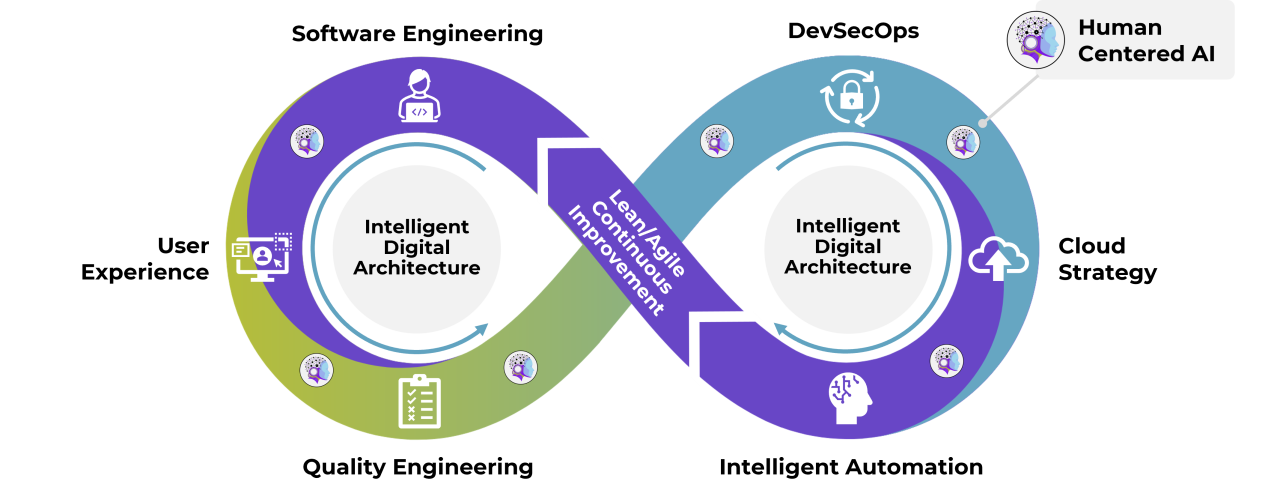
Taming Complexity through Intelligent Digital Architecture
Modern applications often involve a huge number of integration endpoints and multiple layers of dependencies that quickly expose the weakness of traditional, siloed team structures. Digital Engineering embraces this reality and addresses it head-on.
- Intelligent Digital Architecture: By intentionally building solutions in a modular fashion (for example, using scalable microservices, serverless frameworks, or event-driven architectures), teams dramatically reduce technical chaos, respond more quickly to market changes, and keep costs in check.
- Continuous Quality: Instead of discovering critical issues late in the development cycle, testing and validation are built into every phase of design and development. Adopting this proactive “shift-left” approach reduces production defects by up to 70%, significantly enhancing reliability (DORA report).
These technical and procedural advancements are a major shift for products and teams alike. Developers migrate their focus from firefighting to innovation, and stakeholders gain assurance that new releases strengthen, rather than threaten, business operations
Accelerating Delivery with Agile Automation
Speed to market isn’t just desirable – it’s essential. In the IDG/CIO report, recently surveyed CTOs view rapid software updates as fundamental to gaining and sustaining competitive advantage. Digital Engineering rises to this challenge by blending agile methodologies with intelligent automation.
- Rapid Deployment Pipelines: Automated Continuous Integration/Continuous Delivery (CI/CD) systems enable teams to confidently release updates and new features multiple times a week – even multiple times a day – accelerating enhancements and overall responsiveness.
- Adaptive Team Culture: Encouraging a sense of ownership and shared responsibility eliminates traditional bottlenecks. Cross-functional teams collaborate seamlessly, rapidly turning new ideas into reality.
Embedding speed into engineering culture enables businesses to quickly pivot when external forces hold sway. This allows them to respond decisively, rather than being restrained by lengthy approval processes or rigid project timelines.
Unleashing the Power of AI
The growing role of Artificial Intelligence (AI) is the most significant driver for adoption of Digital Engineering. Microsoft predicts that by 2030, up to 95% of software code will be AI-generated – a number that would have seemed fantasy just a few years ago.
- AI-Assisted Coding: Tools that generate and/or refactor code can drastically reduce development overhead, giving engineers more bandwidth to focus on creative, high-level problem-solving.
- Predictive Diagnostics: AI identifies security vulnerabilities, performance bottlenecks and other risk factors before deployment, allowing teams to proactively address potential failures.
By strategically embracing these emergent AI-driven capabilities, organizations can save valuable development time, improve system reliability, and ultimately accelerate the delivery of business value.
AI tools can reduce development time by 50%, freeing teams to tackle bigger, more creative challenges. – Microsoft
User-Centric Design for Maximum Impact
No matter how sophisticated the architecture or tooling, success ultimately depends on meeting the needs of end users. Digital Engineering places Human Centered Design at the core of every product decision, ensuring that real-world challenges guide the features being built. Furthermore, HCD helps keep the focus on the needs of individuals when implementing those features.
Well-implemented UX practices can lead to a staggering 400% return on design investments, highlighting just how powerful user-centric design can be. By seeking and integrating feedback on a continuous basis – versus waiting until a release is nearly finished – teams stay aligned with what customers genuinely value. The result is greater customer engagement and the accelerated growth of recurring revenue.
Adopting a Digital Engineering Mindset
Transitioning from legacy models to Digital Engineering begins with an honest assessment of current practices. Where do bottlenecks or silos exist? How frequently do bugs emerge late in the game, slowing releases and frustrating users? Once these gaps are identified, leaders can define an iterative roadmap for engineering transformation that aligns with broader business goals.
- Evaluate Current State: Gather input from across product, QA, UX, operations, and leadership to identify key performance barriers and opportunities for quick wins.
- Prioritize Key Outcomes: Clearly define whether faster releases, cost efficiency, or customer retention are your top priorities. This clarity helps focus engineering initiatives on where they will have the biggest impact.
- Build Cross-Functional Teams: Unite product managers, developers, designers, and QA experts into cohesive, creative teams. Together they can rapidly innovate and deliver value in far less time than siloed groups.
As organizations adopt Digital Engineering practices, they often find that continual improvement becomes second nature. Incremental successes – like rolling out new features faster or seeing a measurable boost in customer satisfaction – fuel deeper cultural change, spurring teams to refine and evolve their engineering processes even further.
Conclusion
While each new trend carries its own promise, the heart of Digital Engineering remains its emphasis on bringing people, processes, and tools together in a dynamic, user-focused way. By staying open to change, experimenting with new capabilities, and nurturing a culture of collaboration, companies can remain competitive in a market that demands both speed and engineering excellence.
Above all, Digital Engineering provides a blueprint for transforming how software is envisioned, built, and maintained. It shifts the approach from reacting to disruptions as they arise to proactively shaping the future of products and services. In a world growing more connected and more complex by the day, this shift in mindset will be the key factor that separates market leaders from the rest of the pack. Organizations that fail to embrace Digital Engineering risk falling behind their competitors and failing to meet the evolving demands of their customers.
Learn more about Trissential’s Digital Engineering Services: Cloud Strategy | Software Engineering | QA & Testing | PLM
Talk to the Expert

Brian Zielinski – Sr. Director, Digital Engineering
brian.zielinski@trissential.com